Exercise 5.4
1. What is the measure of: (i) a right angle? (ii) a straight angle?
(i) The measure of a right angle is 90°.
(ii) The measure of a straight angle is 180°.
(ii) The measure of a straight angle is 180°.
2. Say True or False:
(a) The measure of an acute angle < 90° → True
(b) The measure of an obtuse angle < 90° → False (It is > 90°)
(c) The measure of a reflex angle > 180° → True
(d) The measure of one complete revolution = 360° → True
(e) If \(m \angle A = 53^\circ\) and \(m \angle B = 35^\circ\), then \(m \angle A > m \angle B\) → True
(b) The measure of an obtuse angle < 90° → False (It is > 90°)
(c) The measure of a reflex angle > 180° → True
(d) The measure of one complete revolution = 360° → True
(e) If \(m \angle A = 53^\circ\) and \(m \angle B = 35^\circ\), then \(m \angle A > m \angle B\) → True
3. Write down the measures of: (a) some acute angles (b) some obtuse angles. (Give at least two examples of each)
(a) Acute angles (measure less than 90°):
Examples: 30°, 45°, 60°, 80°.
(b) Obtuse angles (measure greater than 90° and less than 180°):
Examples: 110°, 120°, 135°, 170°.
Examples: 30°, 45°, 60°, 80°.
(b) Obtuse angles (measure greater than 90° and less than 180°):
Examples: 110°, 120°, 135°, 170°.
4. Measure the angles given below using the protractor and write down the measure.
(a)
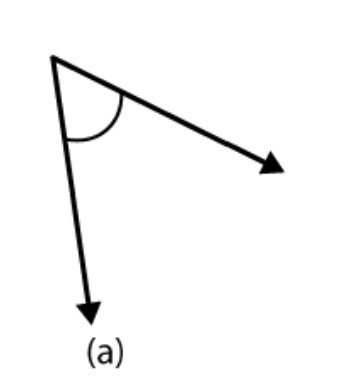 The measure of this angle is 45°
(b)
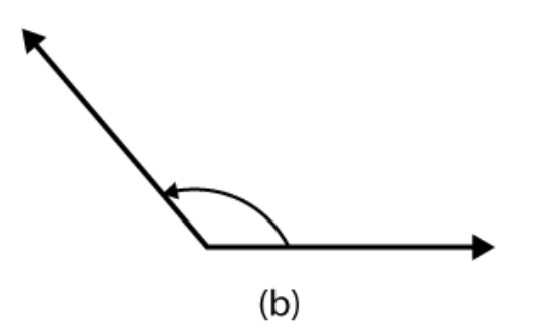 The measure of this angle is 120°
(c)
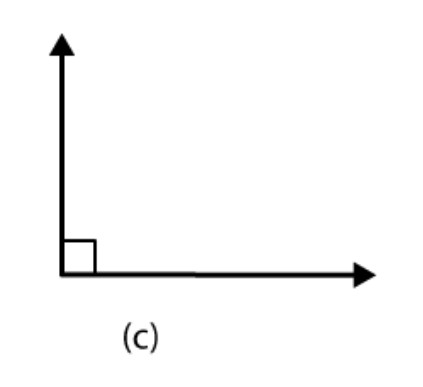 The measure of this angle is 90°
(d)
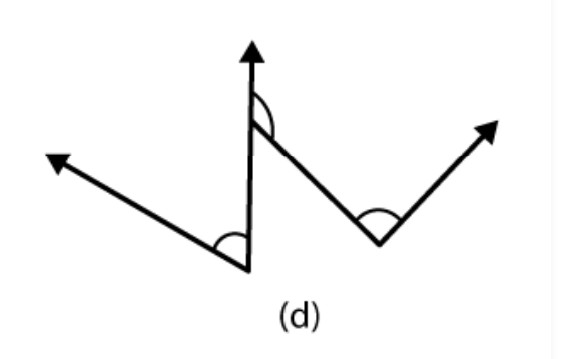 The measures of angles are 60°, 90° and 130°
5. Which angle has a large measure? First, estimate and then measure.
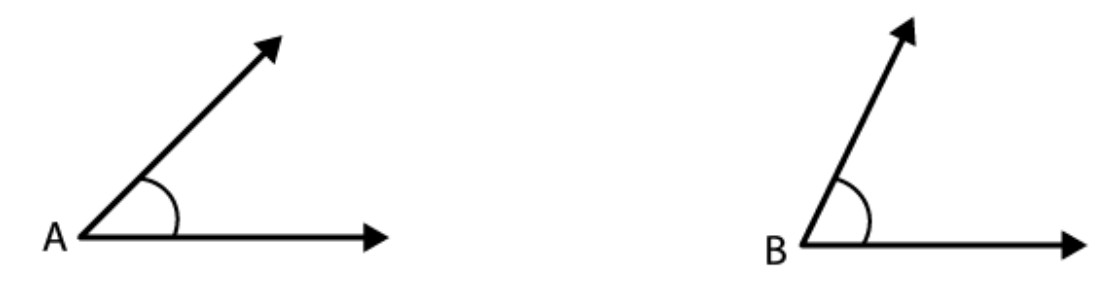
The measure of Angle A = 40°
The measure of Angle B = 68°
The measure of Angle B = 68°
∴ ∠B has a large measure than ∠A.
6. From these two angles, which has a larger measure? Estimate and then confirm by measuring them.
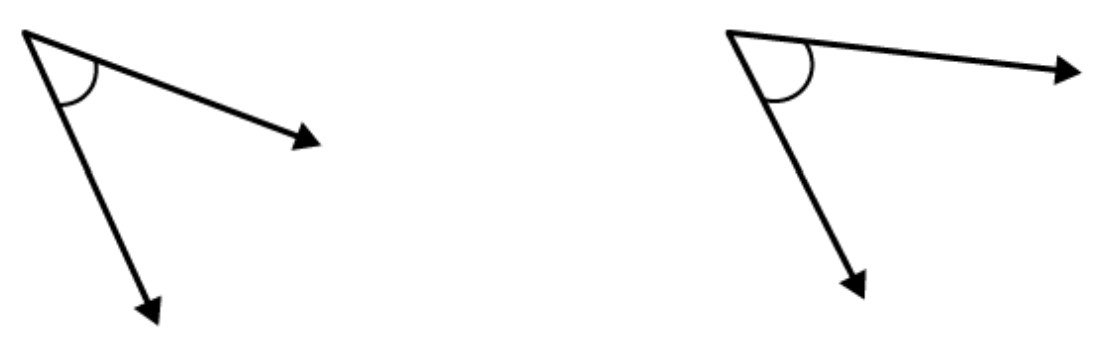
The measures of these angles are 45° and 55°.
Hence, the angle shown in the second figure is greater.
7. Fill in the blanks with acute, obtuse, right or straight:
(a) An angle whose measure is less than that of a right angle is acute.
(b) An angle whose measure is greater than that of a right angle is obtuse.
(c) An angle whose measure is the sum of the measures of two right angles is straight.
(d) When the sum of the measures of two angles is that of a right angle, then each one of them is acute.
(e) When the sum of the measures of two angles is that of a straight angle, and if one of them is acute, then the other should be obtuse.
(b) An angle whose measure is greater than that of a right angle is obtuse.
(c) An angle whose measure is the sum of the measures of two right angles is straight.
(d) When the sum of the measures of two angles is that of a right angle, then each one of them is acute.
(e) When the sum of the measures of two angles is that of a straight angle, and if one of them is acute, then the other should be obtuse.
8. Find the measure of the angle shown in each figure. (First, estimate with your eyes and then find the actual measurement with a protractor).
(a)
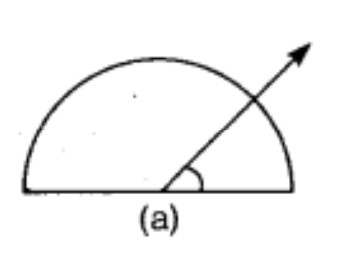 The measure of the angle is 40°
(b)
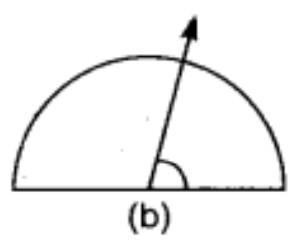 The measure of the angle is 130°
(c)
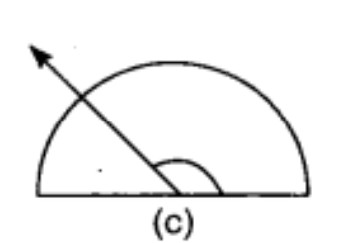 The measure of the angle is 65°
(d)
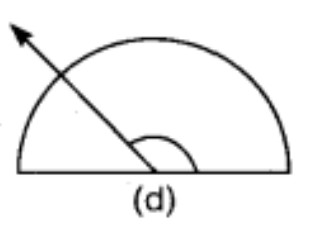 The measure of the angle is 135°
Correct measures: 40°, 130°, 65° and 135°.
9. Find the angle measure between the hands of the clock in each figure.
(a) 9:00 AM
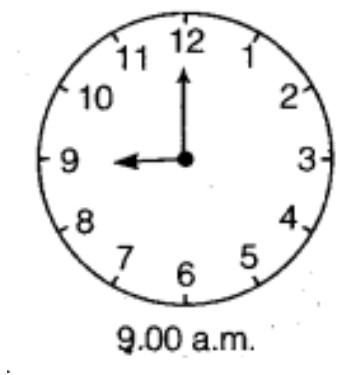 Angle = 90°
(b) 1:00 PM
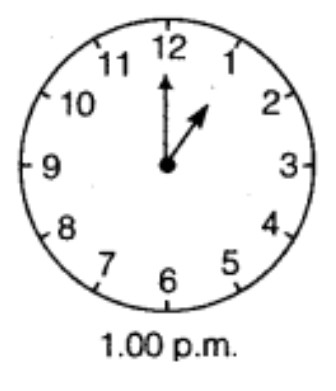 Angle = 30°
(c) 6:00 PM
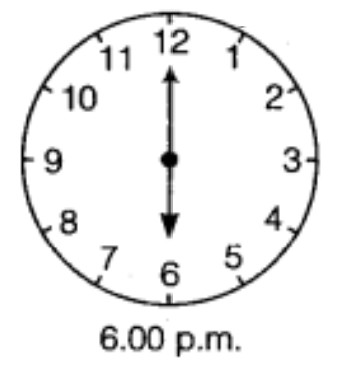 Angle = 180°
Angle measures are 90°, 30° and 180°.