Exercise 3.6
1. Find the HCF of the following numbers:
Method: We use prime factorisation. HCF = product of lowest powers of common prime factors.
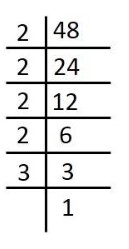
(a) 18, 48
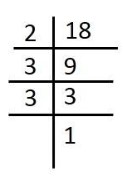
 \(18 = 2 \times 3 \times 3\)
\(48 = 2 \times 2 \times 2 \times 2 \times 3\)
Common prime factors: 2 and 3
\(48 = 2 \times 2 \times 2 \times 2 \times 3\)
Common prime factors: 2 and 3
HCF = \(2 \times 3 = 6\)
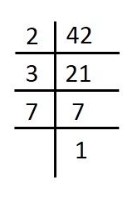
(b) 30, 42
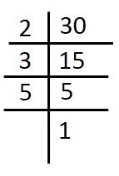
 \(30 = 2 \times 3 \times 5\)
\(42 = 2 \times 3 \times 7\)
Common prime factors: 2 and 3
\(42 = 2 \times 3 \times 7\)
Common prime factors: 2 and 3
HCF = \(2 \times 3 = 6\)
(c) 18, 60
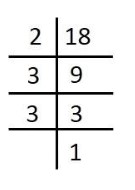
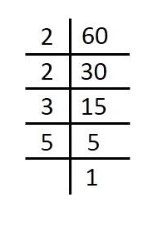 \(18 = 2 \times 3 \times 3\)
\(60 = 2 \times 2 \times 3 \times 5\)
Common prime factors: 2 and 3
\(60 = 2 \times 2 \times 3 \times 5\)
Common prime factors: 2 and 3
HCF = \(2 \times 3 = 6\)
(d) 27, 63
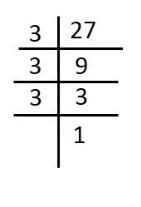
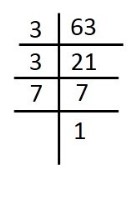 \(27 = 3 \times 3 \times 3\)
\(63 = 3 \times 3 \times 7\)
Common prime factors: \(3 \times 3\)
\(63 = 3 \times 3 \times 7\)
Common prime factors: \(3 \times 3\)
HCF = \(3 \times 3 = 9\)
(e) 36, 84
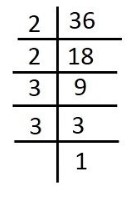
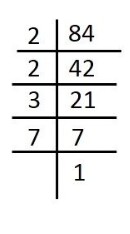 \(36 = 2 \times 2 \times 3 \times 3\)
\(84 = 2 \times 2 \times 3 \times 7\)
Common prime factors: \(2 \times 2\) and 3
\(84 = 2 \times 2 \times 3 \times 7\)
Common prime factors: \(2 \times 2\) and 3
HCF = \(2 \times 2 \times 3 = 12\)
(f) 34, 102
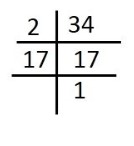
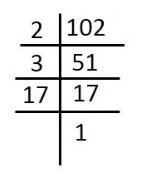 \(34 = 2 \times 17\)
\(102 = 2 \times 3 \times 17\)
Common prime factors: 2 and 17
\(102 = 2 \times 3 \times 17\)
Common prime factors: 2 and 17
HCF = \(2 \times 17 = 34\)
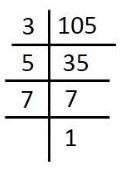
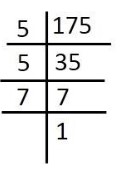
(g) 70, 105, 175
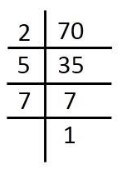
 \(70 = 2 \times 5 \times 7\)
\(105 = 3 \times 5 \times 7\)
\(175 = 5 \times 5 \times 7\)
Common prime factors: 5 and 7
\(105 = 3 \times 5 \times 7\)
\(175 = 5 \times 5 \times 7\)
Common prime factors: 5 and 7
HCF = \(5 \times 7 = 35\)
(h) 91, 112, 49
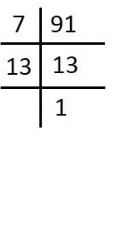
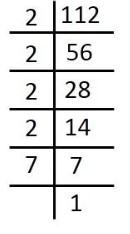
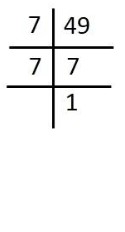 \(91 = 7 \times 13\)
\(112 = 2 \times 2 \times 2 \times 2 \times 7\)
\(49 = 7 \times 7\)
Common prime factor: 7
\(112 = 2 \times 2 \times 2 \times 2 \times 7\)
\(49 = 7 \times 7\)
Common prime factor: 7
HCF = \(7\)
(i) 18, 54, 81
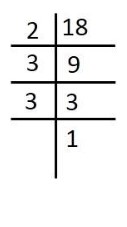
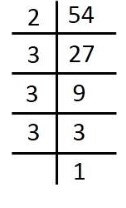
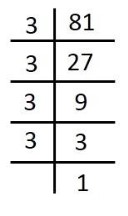 \(18 = 2 \times 3 \times 3\)
\(54 = 2 \times 3 \times 3 \times 3\)
\(81 = 3 \times 3 \times 3 \times 3\)
Common prime factors: \(3 \times 3\)
\(54 = 2 \times 3 \times 3 \times 3\)
\(81 = 3 \times 3 \times 3 \times 3\)
Common prime factors: \(3 \times 3\)
HCF = \(3 \times 3 = 9\)
(j) 12, 45, 75
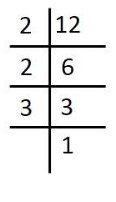
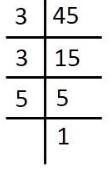
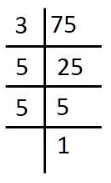 \(12 = 2 \times 2 \times 3\)
\(45 = 3 \times 3 \times 5\)
\(75 = 3 \times 5 \times 5\)
Common prime factor: 3
\(45 = 3 \times 3 \times 5\)
\(75 = 3 \times 5 \times 5\)
Common prime factor: 3
HCF = \(3\)
2. What is the HCF of two consecutive:
(a) HCF of two consecutive Numbers?
Example: 14 and 15 Factors of 14: 1, 2, 7, 14
Factors of 15: 1, 3, 5, 15
Common factor: 1 → always co-prime
Example: 14 and 15 Factors of 14: 1, 2, 7, 14
Factors of 15: 1, 3, 5, 15
Common factor: 1 → always co-prime
Remember: HCF of any two consecutive numbers is always 1.
HCF = 1
(b)HCF of two consecutive Even Numbers?
Example: 10 and 12 Factors of 10: 1, 2, 5, 10
Factors of 12: 1, 2, 3, 4, 6, 12
Common factor: 1, 2 → both divisible by 2
Example: 10 and 12 Factors of 10: 1, 2, 5, 10
Factors of 12: 1, 2, 3, 4, 6, 12
Common factor: 1, 2 → both divisible by 2
Remember: HCF of any two consecutive even numbers is always 2.
HCF = 2
(c)HCF of two consecutive Odd Numbers?
Example: 15 and 17 Factors of 15: 1, 3, 5, 15
Factors of 17: 1, 17
Common factor: 1 → always co-prime
Example: 15 and 17 Factors of 15: 1, 3, 5, 15
Factors of 17: 1, 17
Common factor: 1 → always co-prime
Remember: HCF of any two consecutive odd numbers is always 1.
HCF = 1
3. HCF of co-prime numbers 4 and 15 was found as follows: 4 = 2 × 2, 15 = 3 × 5. Since there is no common prime factor, HCF is 0. Is this correct?
No! The HCF of any two numbers is at least 1, because 1 is a factor of every number.
Factors of 14= 1, 2, 7, 14
Factors of 15= 1, 3, 5, 15
Common factor = 1
So, the correct answer is NO. HCF is 1, not 0.
HCF = 1
Remember: HCF is never 0. The smallest possible HCF is 1.